Decision Guide
Custom Millwork or Prefabricated Cabinets? Choosing the Right Fit
The essential idea
Custom and prefabricated cabinetry solve different problems. Prefabricated systems can suit standard layouts and controlled budgets; custom work becomes valuable when dimensions, materials, integration, or design intent fall outside those limits.
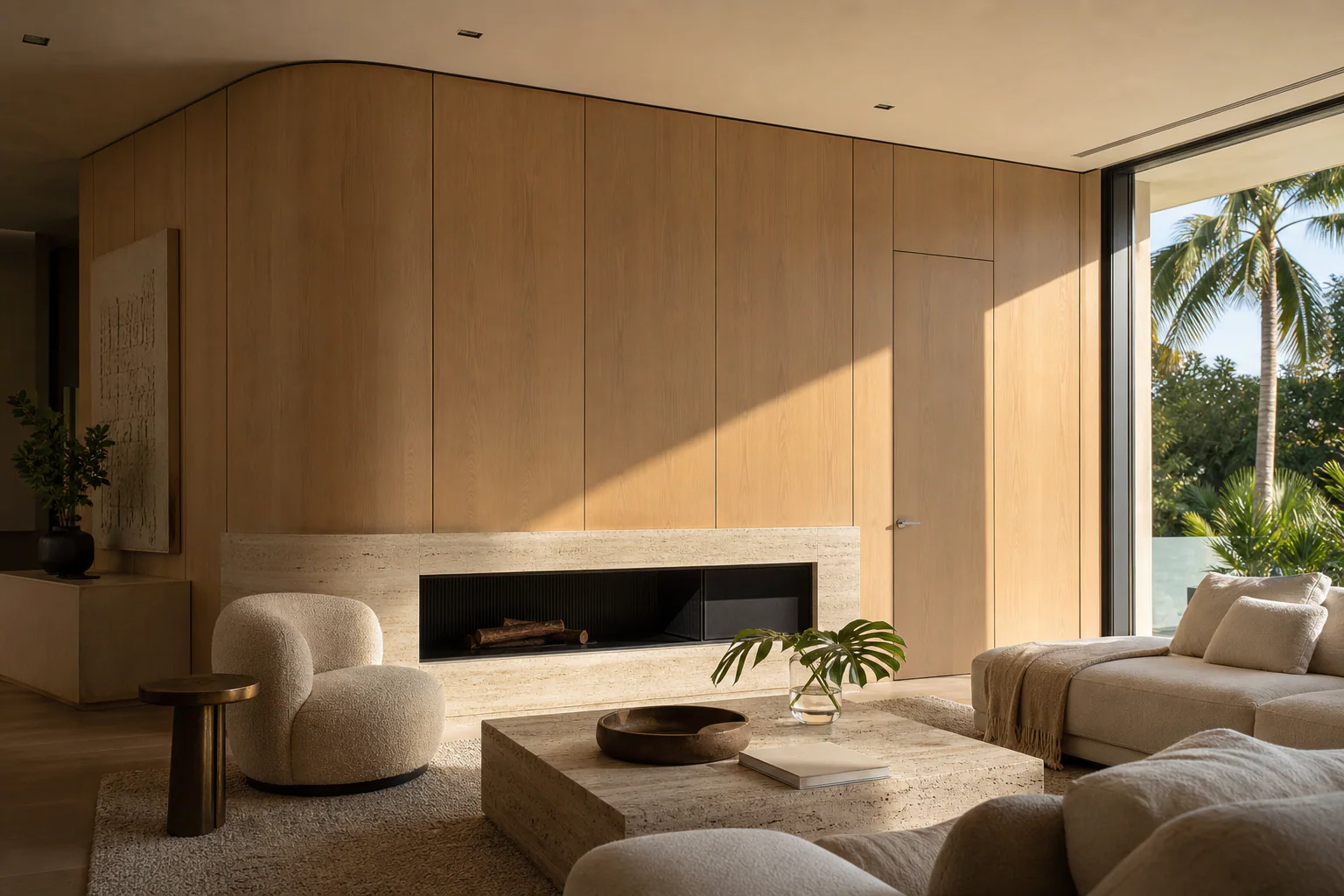
The comparison should include fit, internal function, finish options, site modification, fillers, installation, lead time, future repair, and the importance of a continuous architectural result. It is the thinking we bring to every commission for custom millwork in Miami.
Begin with the room and the routine
Before choosing a door profile or wood species, document the architecture and the daily behavior the millwork must support. Photograph the room, note ceiling and wall conditions, record equipment, list what will be stored, and identify the routes people use most often.
This early information reveals which dimensions are fixed, which can move, and where a custom solution adds genuine value. It also prevents an attractive reference image from being copied into a room where its proportions or function do not belong.
Material decisions for Miami
Humidity, strong daylight, coastal exposure, and aggressive air-conditioning cycles are practical considerations in South Florida. Stable cores, appropriate adhesives, sealed edges, compatible finishes, and suitable hardware matter beneath the visible surface.
Review physical samples in the intended light. Wood tone, grain figure, sheen, stone movement, metal finish, and adjacent paint can read differently in a bright waterfront room than they do in a showroom.
What to resolve before fabrication
The design should be coordinated with walls, floors, ceilings, doors, outlets, lighting, plumbing, appliances, stone, glass, and any equipment that requires ventilation or service access. Critical dimensions should be verified after the relevant site conditions are ready.
- Measure how standard the room really is
- List required internal storage before comparing
- Include installation and modification in the comparison
- Decide where customization has the greatest impact
A better design review
A productive review moves from large decisions to small ones: confirm scope, function, and overall layout first; then proportions, materials, and interfaces; finally hardware, internal accessories, lighting, and finish details.
Ask what each detail contributes, what must remain accessible, how the material will be maintained, and which assumptions still need verification. Clear answers create a calmer fabrication process and a more coherent finished room.